
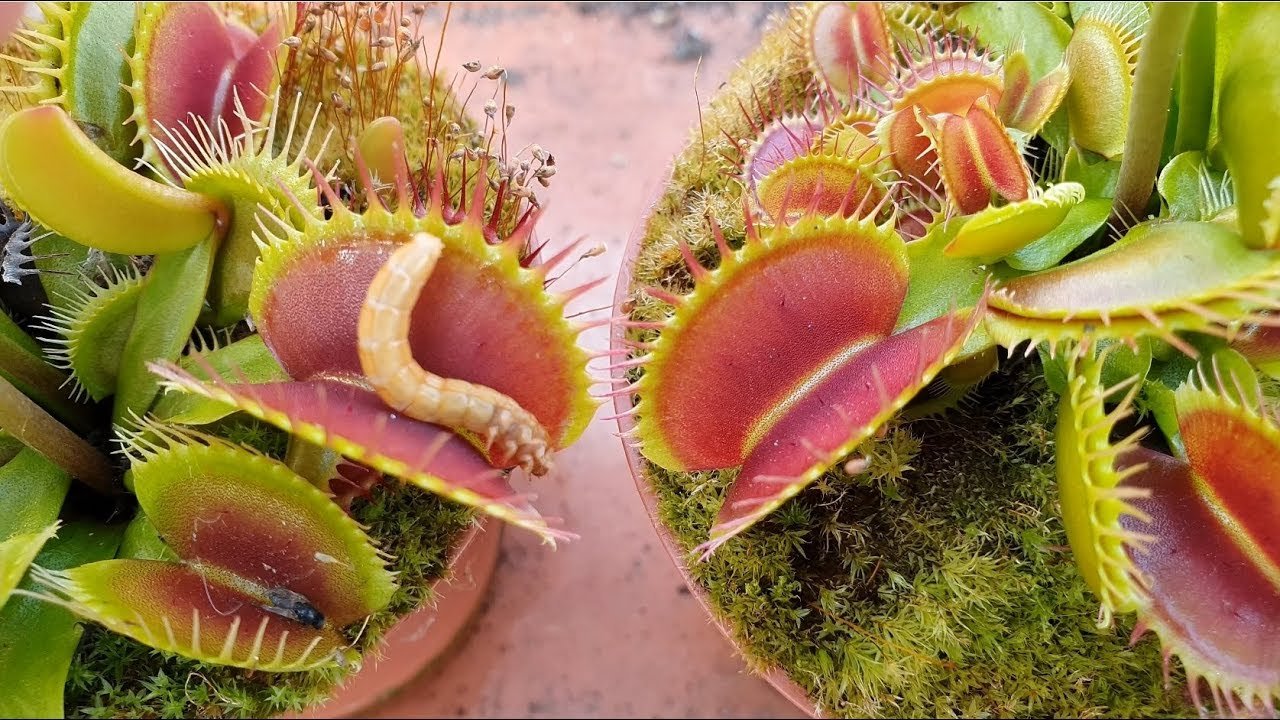
Feeding Mealworms to Carnivorous Plants
Carnivorous plants can benefit from supplemental feeding with mealworms, especially when grown indoors where natural prey is scarce. However, proper technique is essential to avoid harming these fascinating plants.
Which Carnivorous Plants Can Eat Mealworms?
✓ Safe to Feed
- Venus Flytraps (Dionaea muscipula): Can handle small mealworms
- Sundews (Drosera): Larger species only, use tiny pieces
- Butterworts (Pinguicula): Very small pieces for larger species
- Pitcher Plants (Nepenthes): Larger species can handle whole mealworms
✗ Not Recommended
- Bladderworts (Utricularia): Too small, aquatic species
- Cobra Lily (Darlingtonia): Sensitive to overfeeding
- Small Sundews: Prey too large causes damage
- Sarracenia (American Pitcher Plants): Prefer natural prey
Venus Flytrap Feeding Guide
Venus flytraps are the most commonly fed carnivorous plants and can benefit from occasional mealworm feeding.
Feeding Guidelines
- Size: Mealworm should be 1/3 the size of the trap or smaller
- Frequency: Once every 2-3 weeks maximum
- Quantity: Feed only 1-2 traps per plant
- Preparation: Cut mealworm into small pieces for easier digestion
- Trigger: Gently touch trigger hairs twice to close trap
⚠️ Critical Safety Information
- Never Overfeed: Overfeeding can kill the plant - they get most nutrients from soil
- Size Matters: Prey too large prevents trap from sealing, leading to rot
- Dead Prey Only: Use freshly killed mealworms - live ones may escape
- Don't Force Feeding: Plants don't need feeding if they're catching prey naturally
- Avoid Tap Water: Use distilled or rainwater only - minerals harm carnivorous plants
- Limited Trap Life: Each trap closes 4-7 times before dying - don't waste closures
Pitcher Plant Feeding
Tropical pitcher plants (Nepenthes) are more forgiving and can handle larger prey items.
Nepenthes Feeding Guidelines
- Size: Small to medium mealworms for mature pitchers
- Frequency: Once per month per pitcher
- Method: Drop mealworm directly into pitcher
- Pitcher Selection: Only feed mature, fully-formed pitchers
- Quantity: 1-2 mealworms per large pitcher
Sundew Feeding
Sundews are delicate and require extra care when feeding.
Drosera Feeding Guidelines
- Size: Tiny pieces only - smaller than a grain of rice
- Species: Only large species like D. capensis or D. binata
- Frequency: Once every 3-4 weeks maximum
- Method: Place tiny piece on sticky tentacles
- Observation: Leaf should curl around prey within hours
Why Feed Carnivorous Plants?
- Indoor Growing: Supplemental feeding helps plants grown indoors without natural prey
- Faster Growth: Well-fed plants grow faster and produce more traps/pitchers
- Flowering: Extra nutrients can encourage flowering
- Recovery: Helps plants recover from stress or repotting
- Winter Supplement: Useful when natural prey is scarce
When NOT to Feed
- Dormancy: Never feed during winter dormancy (Venus flytraps, Sarracenia)
- Recently Repotted: Wait 4-6 weeks after repotting
- Stressed Plants: Don't feed sick or struggling plants
- Catching Prey Naturally: If plant is catching insects, no need to supplement
- New Growth: Wait until traps/pitchers are fully mature
Best Practices
- Use freshly killed mealworms - freeze then thaw
- Cut into appropriately sized pieces
- Feed during active growing season only
- Monitor plant response - stop if signs of stress appear
- Keep detailed feeding records to avoid overfeeding
- Provide proper light, water, and humidity first - feeding is supplemental
- When in doubt, don't feed - these plants evolved to survive on minimal prey
💡 Pro Tip
Carnivorous plants are adapted to nutrient-poor environments. They get most of their nutrients from their roots, not from prey. Insects provide supplemental nitrogen and minerals, but overfeeding can actually harm or kill the plant. Less is always more with carnivorous plant feeding!